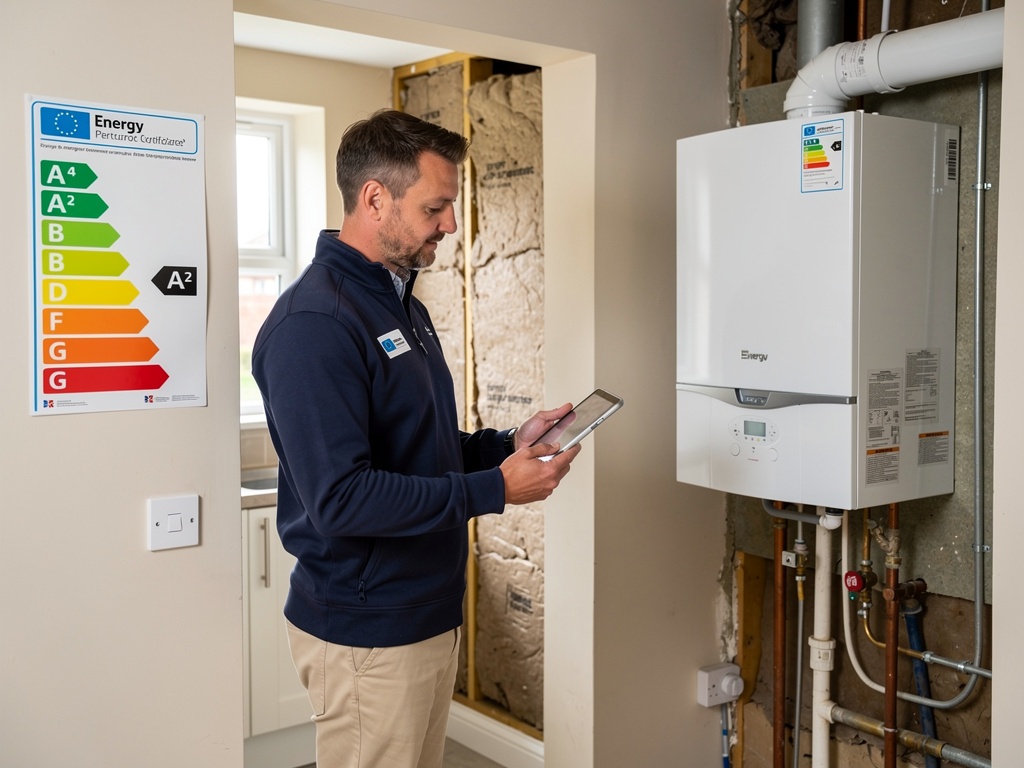
If you are buying, selling, or renting a home in Chelmsford or anywhere in Essex, you have probably come across the term EPC. But what exactly is an Energy Performance Certificate, why does it matter, and what can you do to improve your rating? As your trusted Chelmsford surveyor, we have put together this plain-English guide to answer all your questions.
What Is an Energy Performance Certificate (EPC)?
An Energy Performance Certificate (EPC) is an official document that tells you how energy efficient a property is. It rates the property on a scale from A (most efficient) to G (least efficient) and is valid for 10 years from the date of issue.
The certificate is produced by a qualified Domestic Energy Assessor (DEA) who visits the property and evaluates key factors including insulation, heating systems, windows, roof construction, and hot water provision. The assessment typically takes 45 minutes to an hour for an average-sized home.
In addition to the current rating, the EPC also shows a potential rating — what the property could achieve if all recommended improvements were made. This gives buyers and homeowners a clear roadmap for improving energy efficiency.
Key fact: The average EPC rating for homes in England is D. Many older Essex properties — particularly Victorian and Edwardian terraced houses — score E or F due to solid walls, single glazing, and older heating systems.
Understanding EPC Ratings A to G
Here is a breakdown of what each EPC band means in practice, along with the SAP (Standard Assessment Procedure) score range that each band covers:
When Is an EPC Required by Law?
In England and Wales, an EPC is legally required in the following situations:
- When selling a property — the EPC must be commissioned before the property is marketed and made available to potential buyers
- When renting a property — landlords must provide a valid EPC to new tenants before they move in
- When constructing a new building — builders must provide an EPC upon completion
For rental properties, the rules are particularly strict. Since April 2020, landlords in England have been legally required to have an EPC rating of E or above before renting out a property. The government has proposed raising this minimum standard to C for new tenancies in the coming years — something that will significantly affect older properties across Essex.
Buyer's tip: When viewing a property, always ask to see the EPC. A low rating (E, F, or G) doesn't necessarily mean you should walk away — but it does mean you should factor upgrade costs into your offer price. Our RICS Level 3 Building Survey can help identify the key improvements needed.
What Does an EPC Assessment Cover?
A Domestic Energy Assessor will visit the property and record information about the following elements:
- Construction type — cavity wall, solid wall, timber frame, etc.
- Insulation — loft insulation depth, cavity wall fill, floor insulation
- Heating system — type of boiler, age, efficiency rating, controls
- Hot water system — cylinder insulation, immersion heater, solar thermal
- Windows and doors — single, double, or triple glazing
- Lighting — proportion of energy-efficient light fittings
- Renewable energy — solar panels, heat pumps, ground source heating
The assessor does not need to access every room but will need to inspect the loft space, boiler, and heating controls. The assessment is non-invasive and causes no damage to the property.
How Much Does an EPC Cost in Essex?
The cost of an EPC in the Chelmsford and Essex area typically ranges from £60 to £120, depending on the size of the property and the assessor you use. Larger detached homes or properties with complex heating systems may cost towards the higher end of this range.
EPCs are valid for 10 years, so the cost is spread over a long period. If you have made significant energy improvements to your home — such as fitting a new boiler, adding insulation, or installing solar panels — it may be worth commissioning a new EPC to reflect the improved rating, especially if you are planning to sell or rent.
How Can You Improve Your EPC Rating?
Your EPC report includes a list of recommended improvements, ranked by cost-effectiveness and potential impact on the rating. The most common and impactful upgrades include:
1. Loft Insulation
Adding or topping up loft insulation to 270mm is one of the cheapest and most effective improvements. It can typically raise your EPC rating by one band and can reduce heat loss by up to 25%. The cost is usually £300–£600 for a typical semi-detached home.
2. Cavity Wall Insulation
Most homes built after 1930 have cavity walls that can be insulated relatively cheaply. Cavity wall insulation costs around £400–£800 and can move a property from an E to a C or D rating in some cases.
3. Upgrading the Boiler
If your boiler is more than 10–12 years old, replacing it with a modern condensing boiler can make a significant difference to your EPC score. A modern A-rated combi boiler is much more efficient and can add 5–10 points to your SAP score.
4. Double or Triple Glazing
Single glazing is a major source of heat loss. Upgrading to double glazing across all windows can significantly improve both energy efficiency and the EPC rating — as well as improving comfort and reducing noise.
5. Solar Photovoltaic (PV) Panels
Installing solar panels can push a property into the B or even A band, particularly when combined with other improvements. The upfront cost is higher (typically £5,000–£10,000), but long-term savings on energy bills can be substantial.
6. Smart Heating Controls
A modern smart thermostat with zone controls can improve your EPC rating modestly but makes a significant difference to actual energy bills. The investment is typically £200–£500.
Essex-specific note: Many properties in Chelmsford, Great Baddow, Writtle, and Broomfield are Victorian-era solid-wall homes. These are harder to insulate than cavity-wall properties. External or internal wall insulation is possible but can be more expensive. Our Level 3 Building Survey can identify which insulation methods are suitable for your property.
EPC and Property Value: Does It Matter to Buyers?
Research consistently shows that EPC rating affects property value and sale speed. A study by the Department for Energy Security and Net Zero found that properties with an EPC rating of C or above sold for up to 5% more than equivalent F or G-rated homes.
For buyers in Chelmsford and Essex, the EPC is increasingly important as energy costs remain high. Many buyers now specifically filter for C-rated or above properties when searching online — meaning a poor EPC rating can reduce the pool of potential buyers.
This also makes improving your EPC rating a sensible investment before putting your home on the market. Even modest improvements to reach a C from a D can make a meaningful difference to your sale price.
EPC vs Building Survey: What's the Difference?
It is important to understand that an EPC is not a survey. The two serve very different purposes:
- An EPC measures energy efficiency and running costs. It is a standardised assessment using a specific methodology and only considers energy-related features of the property.
- A building survey (such as our RICS Level 2 or Level 3 survey) is a comprehensive inspection of the property's condition — covering the structure, fabric, roof, walls, floors, drainage, and all visible defects.
You need both. The EPC tells you how energy efficient the property is; the building survey tells you whether the property is structurally sound and what condition it is in. Neither substitutes for the other.
Frequently Asked Questions About EPCs
An EPC is valid for 10 years from the date it was issued. However, if you carry out significant energy improvements to the property — such as fitting a new boiler, adding insulation, or installing solar panels — it is worth getting a new EPC to reflect the improved rating, especially before selling or re-letting.
Yes. In England and Wales, an EPC is a legal requirement when selling a property. It must be commissioned before the property is marketed and made available to any prospective buyer. Failure to provide a valid EPC can result in a fixed penalty fine. The EPC must be included in property listings on portals such as Rightmove and Zoopla.
Since April 2020, landlords in England must have a minimum EPC rating of E for all domestic rental properties. Properties rated F or G cannot legally be let (with some limited exemptions). The government has proposed raising this minimum to C for new tenancies, which would affect a significant number of older rental properties across Essex.
Yes — some improvements are quick and relatively affordable. Topping up loft insulation, replacing an old boiler, and fitting a smart thermostat can all boost your rating. Draught-proofing doors and windows is another low-cost measure. For a detailed plan, start by reading the recommendations on your existing EPC report, or consult a qualified energy assessor.
No. An EPC is purely an energy efficiency assessment and does not cover the structural condition of the property. It will not identify damp, subsidence, roof defects, or any other property defects. For a full picture of the property's condition, you need a RICS Level 2 HomeBuyer Report or a RICS Level 3 Building Survey from a qualified chartered surveyor.
Related Surveying Services in Chelmsford
If you are buying a property in Chelmsford or across Essex and want to understand both its energy performance and its structural condition, our expert team can help. We offer RICS Level 2 HomeBuyer Reports and RICS Level 3 Building Surveys that provide a comprehensive picture of the property you are buying.
We also provide RICS property valuations, party wall agreements, and specialist defect reports across all areas of Essex. Explore our property surveying blog for more guides like this one, or get in touch for a free, no-obligation quote.
Buying a Property in Essex?
Pair your EPC with a professional building survey from Chelmsford Surveyor. Get a free quote within 2 hours.
Get a Free Quote