As a senior surveyor specialising in older properties across Chelmsford and Essex, timber defects are something I encounter frequently — and they're often the most misunderstood findings in any survey report. I've had clients panic at the mention of "woodworm" when the infestation was long extinct, and I've had clients dismiss "active dry rot" as something minor that could wait. Both responses are wrong.
Here's a clear, practical guide to the three main types of timber defect — what they are, how serious they are, and what to do about them.
Woodworm
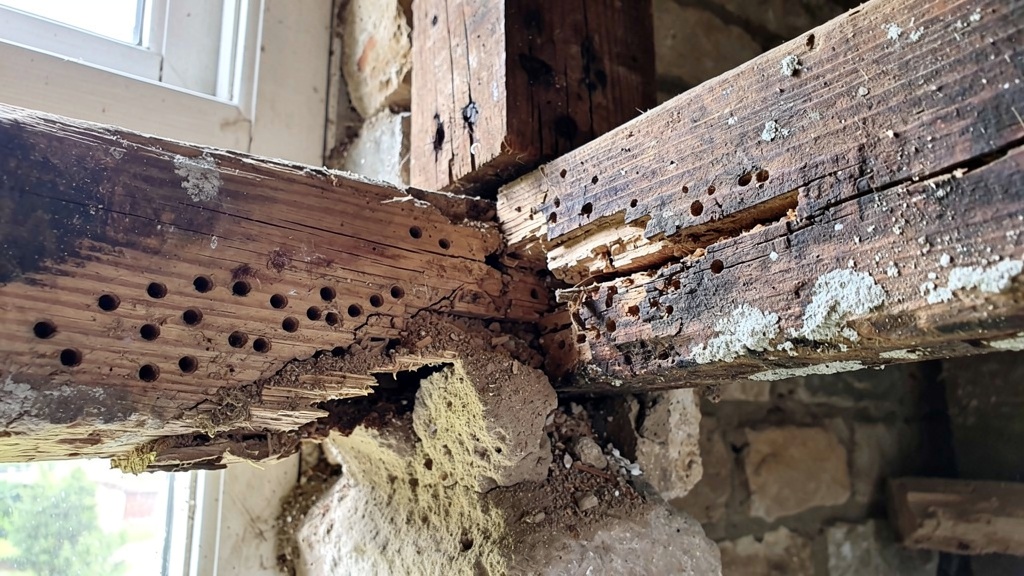
Woodworm is the common name for the larvae of wood-boring beetles — most often the Anobium punctatum or common furniture beetle. The larvae bore through timber, leaving the characteristic small circular holes (typically 1–2mm diameter) that give the condition its name.
The key question with woodworm is always: is it active or historic? Fresh bore holes (pale, clean interior) and visible dust (frass) suggest active infestation. Old, dark, dusty holes suggest past infestation that has run its course.
Where it's found: Floor joists, roof timbers, old furniture, window and door frames.
How serious? Light to moderate woodworm in older timbers is common and often historic. Severe or active infestation in structural timbers needs professional treatment and possibly timber replacement.
Treatment: Insecticidal spray treatment by a specialist timber company. For structural timbers, a specialist survey is recommended first.
Dry Rot
Dry rot (Serpula lacrymans) is a fungal decay of timber that requires moisture to establish but can spread through masonry and insulating materials in ways that other rots cannot. It's the most serious timber defect you're likely to encounter in an older property, and it should always be treated as urgent.
Signs: Brown, crumbly, cube-cracked timber; white or grey fluffy mycelium (fungal growth); orange or red fruiting bodies; distinctive mushroomy smell; and sometimes fine white cotton-wool-like strands spreading across walls and through masonry.
Where it's found: Anywhere with persistent moisture — cellars, floor voids, behind plasterwork in damp areas.
How serious? Very. Dry rot can spread rapidly and silently, destroying structural timbers before the damage is visible on the surface. It requires specialist treatment including removal of all infected timber, treatment of surrounding masonry, and addressing the source of moisture.
Cost: Treatment of a localised dry rot outbreak can cost £2,000–£5,000. Extensive outbreaks affecting floor structures can run to £20,000+.
Wet Rot
Wet rot is actually a group of different fungal species that cause timber decay in persistently damp conditions. Unlike dry rot, wet rot doesn't spread through masonry — it's confined to the damp timber itself. It's much more common than dry rot and, in many cases, less serious.
Signs: Soft, spongy, or fibrous timber; darkening of the wood; paint bubbling or flaking from window frames; possible visible dark fungal growth.
Where it's found: Window frames, external doors, fascias, soffits, and any external or ground-floor timber in contact with moisture.
How serious? Moderate. In external joinery, wet rot is common and usually requires replacement of the affected timber and remediation of the moisture source. In structural timbers, more significant repair work may be needed.
How We Identify Timber Defects in Surveys
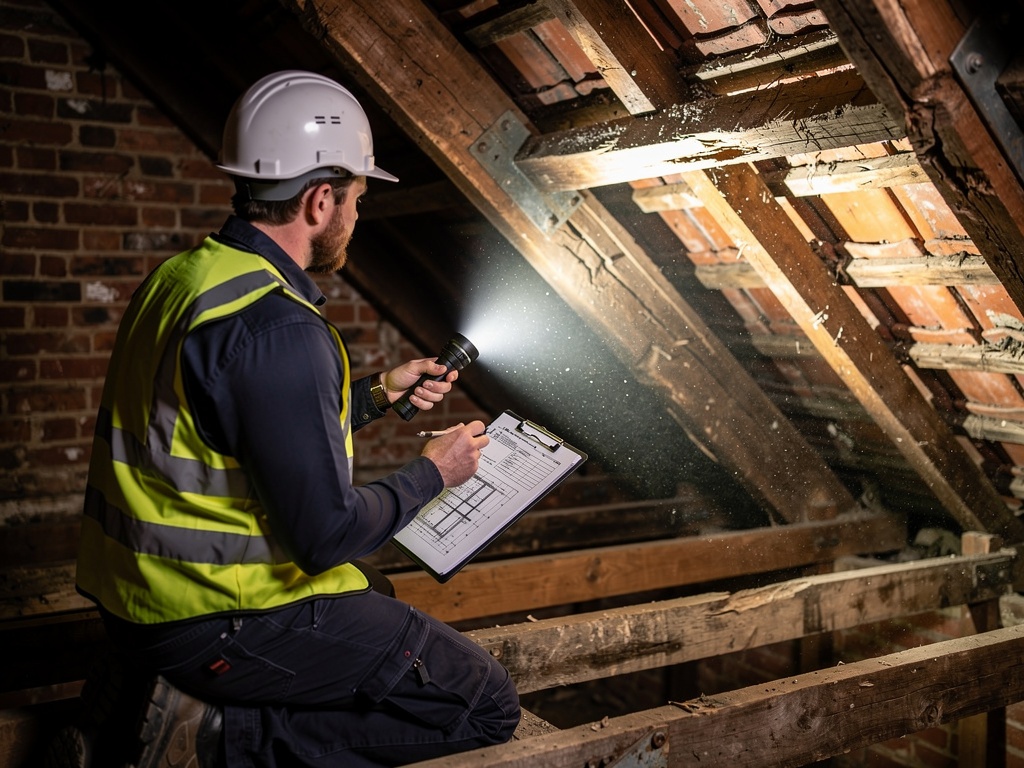
At Chelmsford Surveyor, we use a combination of visual inspection and probing with a bradawl to identify timber defects during our surveys. In accessible areas like roof spaces and underfloor voids, we carry out a careful physical inspection. Where access is limited, we make clear what could not be inspected and recommend specialist investigation where appropriate.
For older properties — particularly Victorian and Edwardian homes in Chelmsford and Essex — timber defects are a key focus of our Level 3 Building Surveys.
Related Reading
- Damp in Your Home: Causes and Solutions
- Buying a Victorian Property in Chelmsford
- Level 2 vs Level 3 Survey
Not necessarily — but you should get specialist quotes for treatment before proceeding. Use the findings to negotiate a price reduction or insist on treatment before completion. The key is understanding the full extent of the outbreak and the likely cost. Dry rot that has been fully remediated is not necessarily a barrier to purchasing — but active dry rot that hasn't been addressed should be a significant concern.
The key is moisture control. Keep gutters and downpipes clear; maintain external joinery with good quality paint; ensure adequate subfloor ventilation; and address any damp or water ingress promptly. Good ventilation and moisture management prevent the conditions that allow rot and infestation to develop.