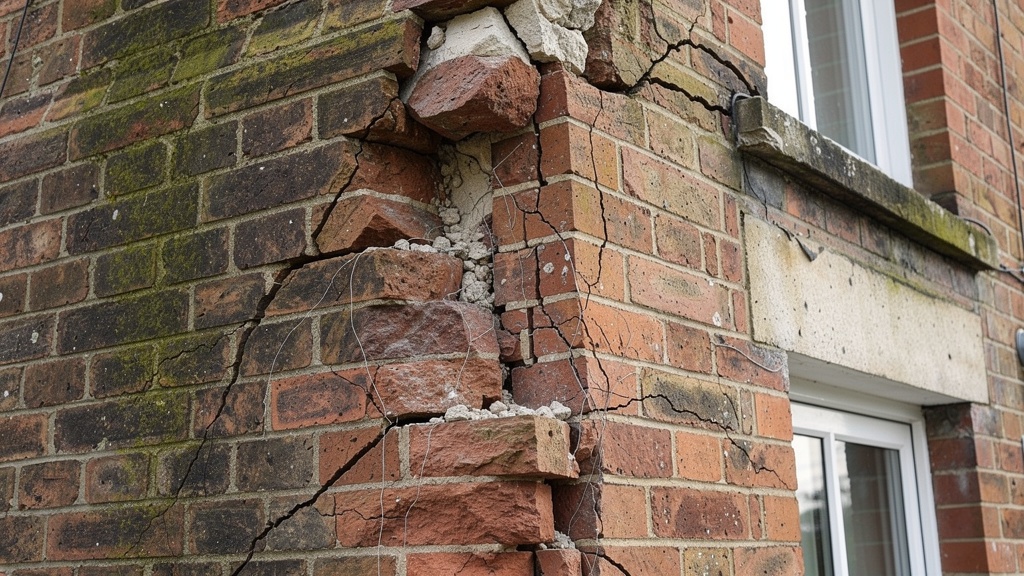
Subsidence is one of those words that can make a property buyer's heart sink. And rightly so — it's one of the most serious defects a Chelmsford surveyor can uncover, and it can lead to significant repair bills, insurance complications, and even difficulties selling the property in future.
But here's the thing: spotting subsidence isn't just a job for the surveyor. As a buyer, there are warning signs you can look for during your viewings — before you even spend money on a survey. Knowing what to look for could save you a very costly mistake.
What Is Subsidence?
Subsidence is movement or sinking of the ground beneath a building's foundations. When the ground moves, the foundations move — and the building moves with them. This creates stress in the structure that manifests as cracks, distortion, and structural damage.
It's particularly common in Essex, where the clay-rich soils are prone to shrinking in dry weather (when trees and shrubs absorb moisture) and swelling when it rains. This cycle of shrinkage and swelling can cause significant foundation movement over time.
10 Warning Signs to Look Out For
1. Diagonal Cracks at Door and Window Corners
One of the most telling signs. Cracks that run diagonally from the corners of windows and doors — particularly in a stepped or tapered shape following the mortar joints in brickwork — suggest differential settlement. If you see these externally, pay close attention.
2. Cracks That Are Wider at the Top Than the Bottom
Ordinary settlement cracks in a house are typically of uniform width. Subsidence cracks are often wider at one end — usually the top — because one part of the building has moved more than another. This tapering pattern is a significant red flag.
3. Sticking Doors and Windows
If doors and windows are difficult to open and close — particularly in an otherwise well-maintained property — it can indicate that the door frames or window frames have been distorted by structural movement. Check every door and window on your viewing.
4. Visible Gaps Between Walls and Ceilings or Floors
A separation between the wall and the ceiling, or between the skirting board and the floor, can indicate that parts of the building have moved relative to each other. Don't dismiss this as cosmetic — it may be structural.
5. Rippling or Uneven Wallpaper
While this can have many innocent causes, wallpaper that ripples or buckles along cracks in the plaster beneath can sometimes be a sign of structural movement. Lift a corner of the wallpaper to check if there are cracks beneath.
6. Sloping Floors
All old houses have some unevenness — but a noticeable slope or dip in the floor, especially if it has worsened over time, can indicate settlement beneath. Ask the vendor whether they've noticed any change.
7. Cracks in External Brickwork
Look carefully at the external brickwork. Cracks that follow the mortar joints (staircase cracks) or run through the bricks themselves are worth examining closely. Fresh-looking cracks are a concern; historic cracks that have clearly been repaired multiple times are an even bigger one.
8. Evidence of Previous Repairs
Repointing, patches of different-coloured mortar, or areas of brickwork that look newer than the rest can all indicate that cracks have been repaired previously. This isn't necessarily alarming on its own, but it warrants investigation.
9. Trees Close to the Property
Large trees — especially willows, poplars, and oaks — near the property are a subsidence risk factor in Essex's clay soils. The roots extract moisture from the soil, causing it to shrink. If there's a large tree within 10–15 metres of the building, make sure your surveyor knows about it.
10. Insurance Claims History
Before purchasing any property in Chelmsford or Essex, ask for details of any insurance claims made on the property. A previous subsidence claim will be a significant factor — affecting insurability, value, and the type of survey you'll need.
What Should You Do If You Spot These Signs?
If you notice one or more of these warning signs during a viewing, the most important thing is not to panic — but to act. Here's what I recommend:
- Commission a RICS Level 3 Building Survey. A Level 2 isn't appropriate where subsidence is suspected. A Level 3 will give you the detailed analysis you need. Read our comparison: Level 2 vs Level 3 Survey.
- Mention your specific concerns to the surveyor. When booking, tell us exactly what you've seen. We'll pay particular attention to those areas.
- Consider a structural engineer's report. In some cases, our Level 3 survey may recommend a specialist structural engineer's assessment. This is additional cost but essential information.
Subsidence in Chelmsford and Essex: The Local Picture
Essex's London clay soils mean that subsidence is a real concern across the county — more so than in parts of the UK with more stable, sandy or gravelly subsoils. Properties built on clay are particularly vulnerable to subsidence associated with tree root action and drought conditions.
As a local Chelmsford surveyor, I know which areas carry higher subsidence risk and what to look for in the local housing stock. That knowledge is one of the key advantages of using a genuinely local firm rather than a national operator.
Related Articles
- Level 2 vs Level 3 Survey: Which One Do You Need?
- Buying a Victorian Property in Chelmsford?
- Damp in Your Home: How to Spot It
Yes — in most cases, subsidence can be remedied. Common solutions include underpinning the foundations, tree removal, and soil treatment. The cost varies enormously depending on the cause and extent, but it can run from a few thousand to tens of thousands of pounds. A specialist structural engineer will advise on the best approach.
Active or recent subsidence can make it difficult to secure a mortgage and insurance. Historic, stable subsidence that has been properly remedied is less problematic — but you'll need to be fully transparent with your lender and insurer. This is another reason why a thorough survey is so important before committing to purchase.
In Essex, the most common causes are: tree root action in clay soils (particularly oak, willow, and poplar), shrinkage of clay subsoil during dry periods, leaking drainage allowing soil washout, and old inadequate foundations in Victorian and Edwardian properties. Our surveyors are very familiar with all of these across the Chelmsford area.