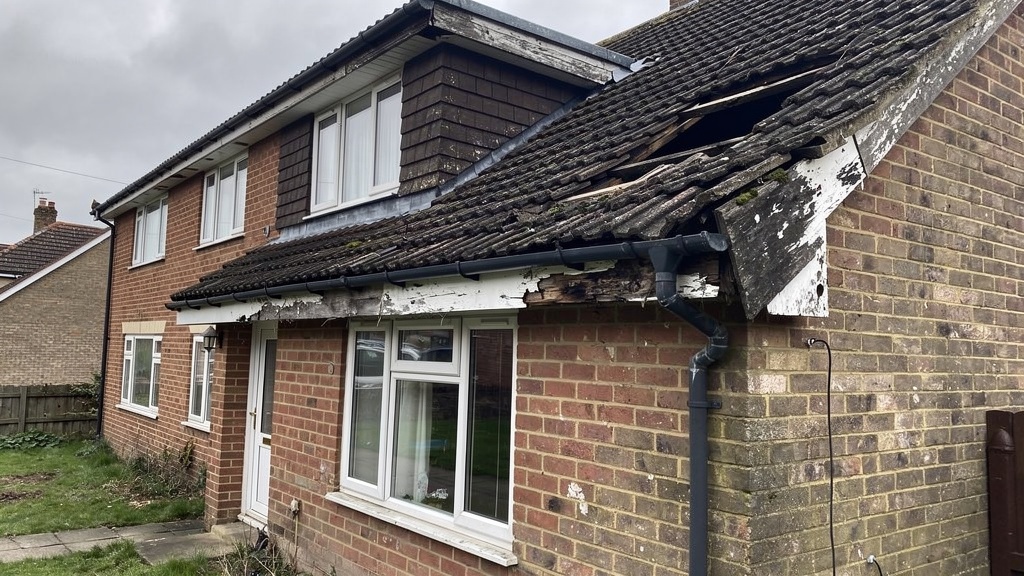
The roof is arguably the most important element of any property — and it's also one of the most frequently neglected. In my career as a Chelmsford surveyor, I've seen more roof-related problems than I care to count. From missing slates on Victorian terraces to failed flat roof coverings on 1970s extensions, roof defects come in many forms — and they're almost always more expensive to fix than they look.
Why Roof Defects Matter So Much
A failing roof doesn't just let in rainwater — it can lead to dampness in the ceiling and walls, deterioration of roof timbers, and damage to the property's insulation and internal finishes. Left untreated, what starts as a couple of missing tiles can escalate into a significant structural repair. That's why roof inspection is a key part of every survey we carry out across Essex.
The Most Common Roof Defects in Essex Properties
1. Missing or Slipped Roof Tiles and Slates
The most obvious — and most common — roof defect. Individual tiles or slates can slip, crack, or break over time due to weathering, frost action, or the failure of the nibs or fixings that hold them. Even a single missing tile can allow water ingress during heavy rain. On older properties, widespread slippage may indicate that the original fixings have corroded and the entire roof covering is approaching the end of its life.
2. Defective Pointing at Ridges and Hips
The ridge tiles at the apex of a roof, and the hip tiles at the corners, are bedded in mortar. Over time, this mortar cracks and erodes, allowing water to penetrate and the tiles to become loose. This is a very common — and very fixable — defect, but if left unaddressed it can cause tiles to fall and damage the roof structure beneath.
3. Failed Lead Flashings
Flashings are the strips of lead (or sometimes felt or zinc) that seal the junction between the roof and vertical elements like chimney stacks, dormer windows, and party walls. Lead flashings have a long service life, but they do eventually crack and fail — particularly at chimney stacks. Failed flashings are one of the most common causes of penetrating damp in older properties.
4. Flat Roof Deterioration
Flat roofs — typically found on extensions, garages, and bay window roofs — are the problematic Cinderella of the roofing world. Traditional felt flat roofs have a relatively short life (10–15 years), and I regularly inspect properties where the flat roof covering has split, blistered, or pulled away from its upstands. Modern alternatives (GRP, EPDM) are more durable but still require professional installation.
5. Blocked or Defective Gutters and Downpipes
Blocked gutters overflow, directing rainwater down the face of the external walls and into the foundations. Cracked or leaking downpipes can saturate ground next to the building. These are relatively cheap to fix — but the consequences of leaving them are disproportionate. I always check gutters and rainwater goods carefully on every survey.
6. Defective Chimney Stacks
Chimney stacks are exposed to more weathering than any other part of the building, and they deteriorate accordingly. Common issues include failed mortar pointing, cracked or spalled brickwork, and pot or cap failure. In severe cases, structural instability of the stack itself is possible. Any property with a chimney stack — especially an older property — should have it carefully inspected.
7. Timber Decay in Roof Structure
Where water has been entering the roof space over a period of time, the timber roof structure (rafters, purlins, ridge board) can be affected by wet rot or, in more serious cases, dry rot. This can compromise the structural integrity of the roof and requires prompt attention. A full roof space inspection is included in our Level 3 surveys wherever safe access is possible.
What to Look Out for During Your Viewing
You don't need to be a surveyor to spot potential roof problems during your property viewing. Look out for: visible missing or slipped tiles from the street; sagging or uneven rooflines; dark staining on ceiling or top floor walls (indicating water ingress); and gutters that are overflowing or clearly blocked. Any of these are worth mentioning when you book your survey.
Related Reading
- Level 2 vs Level 3: Which Survey Do You Need?
- Buying a Victorian Property in Chelmsford
- Damp in Your Home: Causes and Solutions
- What Does a Building Surveyor Look For?
A full roof re-covering on a standard 3-bedroom property in Essex typically costs between £5,000 and £15,000 depending on the size, material, and complexity. Minor repairs (repointing ridges, replacing individual tiles) may cost a few hundred pounds. Our surveys provide approximate repair cost guidance where possible.
Our surveyors carry out a detailed roof inspection as part of every survey. In some cases — particularly where significant structural or specialist roofing issues are suspected — we may recommend a further specialist assessment. A Level 3 survey is typically the best starting point for any older property.